
Fire Season
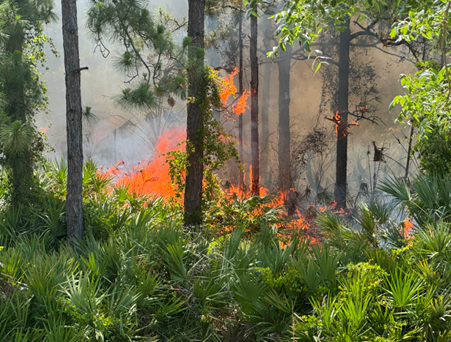
The primary fire weather season in Florida is January through June, when rainfall is lowest, dry plants are abundant, and gusty winds with lower relative humidity often occur. However, critical fire conditions can occur year-round, particularly during drought.
Lightning in the spring is a potent wildfire ignition source when fuels, such as plants, trees and grasses, are dry and soil moisture is low. Wildfire threat diminishes during summer through early autumn as rains keep fuels damp and become less receptive to ignition. Although Florida is the lightning capital of the country, with dry grass and high temperatures making the state a higher fire risk, humans are the leading cause of blazes.
Most human-caused fires are not started intentionally. Unfortunately, many human activities generate enough heat to start an uncontrolled fire. Humans cause nearly 90% of wildfires in the United States via discarded cigarettes, unattended campfires, burning debris, or through equipment malfunctions. Discard cigarettes appropriately. Carefully plan camp and debris fires away from brush and trees on non-windy days, and monitor them as they burn. Ensure that the fire is completely extinguished. Report all downed power lines and repair any malfunctioning equipment or vehicles to avoid heat and sparks from causing fires.
Regular landscape maintenance is imperative in order to protect your home and yard from wildfires. Plant less flammable vegetation away from homes. Instead, use annuals and high-moisture perennials near houses. Prune trees away from the home and ensure the lowest limbs are 6-10 feet off the ground. Water plants regularly so that they stay green and healthy. Consider the amount of space around your home. Palmetto can grow more than five feet tall without regular fire. In addition, consider a fire break around your home, where possible. A minimum of 30 feet of clear space is recommended.
While most of the fires reported in the news appear dire and affect homes, some types of fires are welcome and needed for the continued health of wooded areas and preserves. Fire shaped Florida’s landscape long before roads, homes, canals and bridges. Lightning started fires that burned regularly through forests and grasslands. Plants and animals developed adaptations to these types of “good fires.” Good fires clear underbrush and prevent the buildup of dense vegetation that regularly fuels large-scale fires throughout the state. If left unmanaged, the forest floor becomes a thick layer of dead pine needles, leaves, sticks and twigs, and the risk of fire danger increases with the amount of fuel on the ground. Good fires burn the forest floor, clearing the fuel to prevent future fires and make way for new vegetation.
Overgrown areas force animals to forage outside their natural habitat. Regular food supplies run low for gopher tortoises and other species that rely on periodic fire to burn off excess vegetation common in preserves. Periodic fires promote the diversity of plants and animals that thrive in these areas. Gopher tortoise burrows are deep and serve as shelter for a variety of wildlife, including indigo snakes. During wildfires, many different species will use the tortoise’s burrow to hide and stay safe until the fire subsides.
Fire is a natural process. People build homes close to nature to enjoy its beauty. Enjoying that beauty means recognizing that fire is a natural occurrence, and people can live in fire-prone areas if they accept that regular fire is required to ensure their safety and to maintain healthy ecosystems.
In most of Northern’s preserve areas, while vegetation reduction through natural means, such as fire, is optimal, it is not practical. In those areas, our environmental team hires contractors to reduce vegetation through manual or machine cutting to replicate naturally occurring reduction. This alleviates some of the dense undergrowth that could potentially create fires. In preserve areas near houses, our team is monitoring and scheduling vegetation reduction in areas maintained by Northern to create fire breaks.
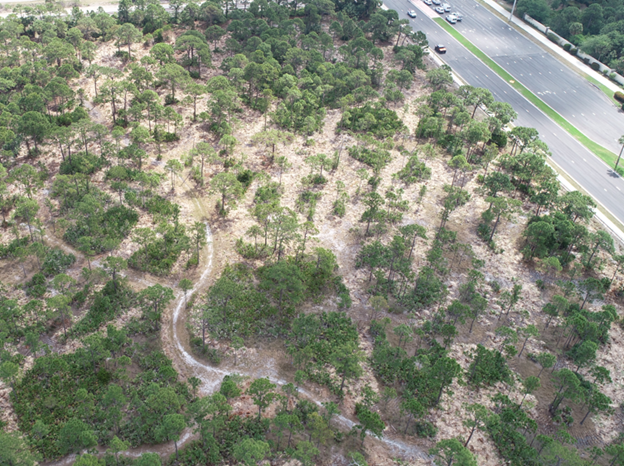
Manual Vegetation Reduction within Abacoa Preserve Area
Maintaining preserves within South Florida is a challenge. However, it is a challenge that, with proper maintenance and an occasional naturally controlled fire, can lead to healthy, beautiful preserves that everyone can enjoy for years to come.